You've delegated the code.Now orchestrate the development cycle.Now orchestrate the dev cycle.
Learn to build an autonomous workflow with Claude, Ruby and Rails: agents connect planning, implementation, tests, deployment and monitoring, with you orchestrating the decisions and optimizing the factory.
Launch livestream: November 26, 2026, at 8 PM Brasília time.
Instructors
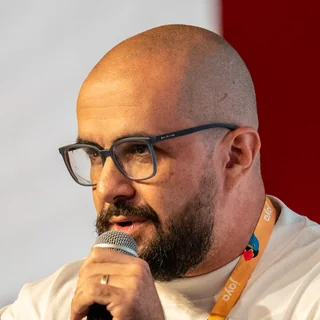
SerraduraSpecialist in software development, architecture and durable context for people and AI agents.
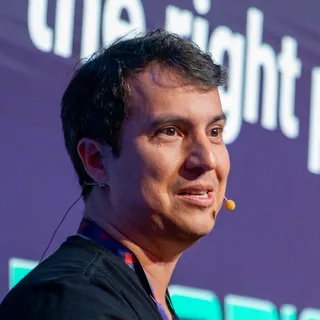
Jackson PiresSoftware engineer, entrepreneur and educator. More than 40,000 students trained.
For devs who already use agents, with or without SDD, and need to get out of the loop without losing control of the delivery. Taught in Portuguese.
What is the problem?
You became the bottleneck.
You ask for an implementation. The agent delivers. But choosing the next task, reviewing the result, deploying and monitoring the application still depend on you. At each stage, the work comes back to your hands.
Choose the task
you
Implement
the agent
Review
you
Deploy
you
Monitor
you
you
Work moves while you are at the keyboard.The backlog grows while you are not.
Already use SDD? But who drives the rest of the cycle?
Spec-Driven Development (SDD) solves one stage, from spec to code. The rest stays in your hands: the triage that starts the work, what holds the quality and what happens after deployment.
The same question, two answers.
You are here
SDD in one session
Spec, plan and implementation, with you at the keyboard.
We take you here
Software factory
You build it in the course and take it to your career, projects and company.
01Who starts the work
SDD in one sessionYou, with a prompt
Software factoryA ticket, an alert or a schedule
02Where the work runs
SDD in one sessionOn your machine, with the session open
Software factoryIn CI or even on your machine, with you away from the keyboard
03Where the work ends
SDD in one sessionAt the agent's “done”, in your hands
Software factoryIn production, with monitoring
04What holds the quality
SDD in one sessionInstructions the agent can ignore
Software factoryHooks, evals and gates that block
05When an error shows up in production
SDD in one sessionYou investigate
Software factoryThe alert becomes a ticket, and the agent triages it and opens the PR
06When the model changes
SDD in one sessionYou notice over time
Software factoryThe eval suite flags the regression
07Your role
SDD in one sessionIn the loop, at every stage
Software factoryAt the gates, with the evidence in hand
In one sentence
SDD organizes one delivery.
The factory keeps deliveries on autopilot, with you in command.
The same question, two answers. Tap the card to switch.
You are here
SDD in one session
Spec, plan and implementation, with you at the keyboard.
Who starts the work
You, with a prompt
Where the work runs
On your machine, with the session open
Where the work ends
At the agent's “done”, in your hands
What holds the quality
Instructions the agent can ignore
When an error shows up in production
You investigate
When the model changes
You notice over time
Your role
In the loop, at every stage
In one sentence
SDD organizes one delivery.
We take you here
Software factory
You build it in the course and take it to your career, projects and company.
Who starts the work
A ticket, an alert or a schedule
Where the work runs
In CI or even on your machine, with you away from the keyboard
Where the work ends
In production, with monitoring
What holds the quality
Hooks, evals and gates that block
When an error shows up in production
The alert becomes a ticket, and the agent triages it and opens the PR
When the model changes
The eval suite flags the regression
Your role
At the gates, with the evidence in hand
In one sentence
The factory keeps deliveries on autopilot, with you in command.
From intent to orchestration
The software factory is installed in your repository: it receives the work, drives each stage and returns the evidence. You set the goals and context; agents move forward within your rules and gates.
Each stage leaves an artifact in git and passes a check before it moves on. When production reports a problem, the cycle starts again, without waiting for your prompt.
You orchestrate.Goals, context and criteria.
Plan
Build
Verify
Deploy
Monitor
Evolve
Software factory
Software advances. The cycle continues.You define the goals, rules, permissions and approval points.
Be the dev who puts AI to work
Bring more than ideas about AI to your next meeting: a working autonomous development workflow, with results and evidence you can present.
Learn to build a process you can use, assess and improve across your team, projects and company. Build the repertoire to propose adoption and demonstrate the power of this change.
At your next meeting or interview,what will you have to present?
In a meeting, the CEO asks for proposals to bring AI to the whole development cycle. Two people raise a hand, and you only watch.
Goal for the quarter:AI across the whole development cycle.Who has a proposal?
4 / 12
Dom (CEO) is presenting
DODom (CEO)
DADaniel
SOSofia
You watching
10:32Quarterly planning
In an interview, the CTO asks you to describe your experience implementing, maintaining and working with an agentic software factory.
Nina (CTO)
You
NINina (CTO) Tell me about your experience implementing, maintaining and working with an agentic software factory.
15:00Technical interview
Students who learned with the instructors
Testimonials about other courses by Jackson Pires and Serradura, translated from Portuguese.
I'm working for an American company.And one of the main reasons is this course. I could stop here, because that alone is reason enough for you to invest in this course. Here's how this course helped me reach this career milestone: Serradura opened my eyes to the key principles of programming in a way that only an expert can.
Serradura is an excellent teacher. His teaching combines theory and supporting materials that broaden our understanding of the content covered in class.
He shares his extensive experience clearly, combining theory with simple, practical examples that make learning much easier.
I recommend it to developers who understand that simple, well-built software is enough to keep a codebase long-lived and easy to maintain.
What I enjoyed most was the interaction during the Q&A sessions. In addition to being an excellent teacher, Jackson is very approachable.
Serradura explains many language concepts and the use of OOP in a very clear and practical way. I highly recommend the course. It is definitely a turning point.
Here you'll find clear explanations of theory, practical examples and all the support you need to grow!
Worth every penny. A quality course for anyone who really wants to learn.
Even though I had used it before, I learned many things that help me use this constantly evolving front-end tool correctly.
What's included
Member platform
Rails Whey works for your results.
The heart of the subscription: this is where you apply the course to your project, with the team and with other members.
Course MCP
Your agent inside the platform
Through the MCP, your agent operates the platform: sends questions, fetches resources and helps you implement.
Course MCP↙↘Questions and requestsLesson resources
My journey
Personal follow-up
After each module, you mark on the curve where you feel you are, and the team follows along.
Understanding how to do it
Discovering how to do itMaking it happen
Where do you need help?
Conversations
One-to-one support
Talk privately with the course team. Either you or the team can open a Conversation.
Serradura opened this Conversation from your check-in.
RS
SerraduraTeam
Your check-in stalled after module 5. Do you need help?
Waiting for youOnly you and the team
Community
Networking and peer exchange
Topics and replies with other members, in channels by subject.
Arrived this week: Caio and Beatriz
# Show your project
My review workflow with agents, from plan to deploy
RSPALNMC5 replies
# Rails in practice# AI and agents
Materials
Resources to retain and apply
Prompts, skills and other resources, unlocked with each module you complete.
Module 2 completed: 6 materials
PromptCopy
SkillDownload
Agent configurationDownload
Achievements
Gamification that supports your progress
A badge for each achievement. Criteria and progress always in view.
1Module 1
2Module 2
Module 3
First check-in
Three check-ins2 of 3
Lessons, sessions and access
Course
Lessons available on Hotmart
An autonomous workflow in a Rails project, from planning to deployment.
Rails practiceAI Native RailsFrom intent to orchestration
Sessions
Monthly 1-hour sessions
Live, with Jackson Pires and Serradura, for people at the start, in the middle or at the end of the course.
SerraduraJackson Pires
Live
Access
One year of access
Access renews with the subscription and includes the lessons, the member platform, the MCP and the sessions.
Purchase
You get access to the course, the member platform and the MCP.
Material released
The lessons and the materials of each module arrive in stages.
Updates and new content
Recordings of the monthly sessions, plus new lessons and materials as the market evolves.
Discover AI Native Rails
First cohort launch
See an agentic software factory in action.
November 26, 2026, at 8 PM Brasília time. Taught in Portuguese.
With Jackson Pires and Serradura
Discover what you can put to work in your projects, team, company and career.
A special offer will be presented at the livestream.
The paradigm has shifted, and you need to master the new software engineering.
Before you join
I already use SDD. Is that what the course is?
SDD is one stage of the cycle, and the course starts from it. The rest is what surrounds it: triage, hooks and gates that block, review by agents, evals of your harness, deployment, monitoring and the incident that comes back as the next task.
What experience do I need?
The course assumes experience with software development, tests, Git with pull requests and coding agents. It was designed for mid-level to senior devs who want to apply this process to real products. Ruby on Rails is the base of the course, but what you learn applies to other frameworks and languages.
How does support work?
You talk to the AI through the MCP, with human supervision and intervention behind the scenes when needed. If a question needs human intervention, the AI will follow up within two business days of your question. This will be an answer or an update with the next step and an expected completion date.
How do the live sessions work?
The sessions are monthly, last 1 hour and take place with the instructors, for people with an active subscription. They serve different profiles in the group: people at the start of the course, and people in the middle or at the end.
Can I enroll my team?
Yes. Company conditions will be presented with the offer at the livestream.
Build the process.Orchestrate the dev cycle.
Help your team, projects and company get more from AI. Learn to orchestrate agents in an autonomous development workflow with Claude, Ruby and Rails, from planning to deployment, maintenance and ongoing evolution.